
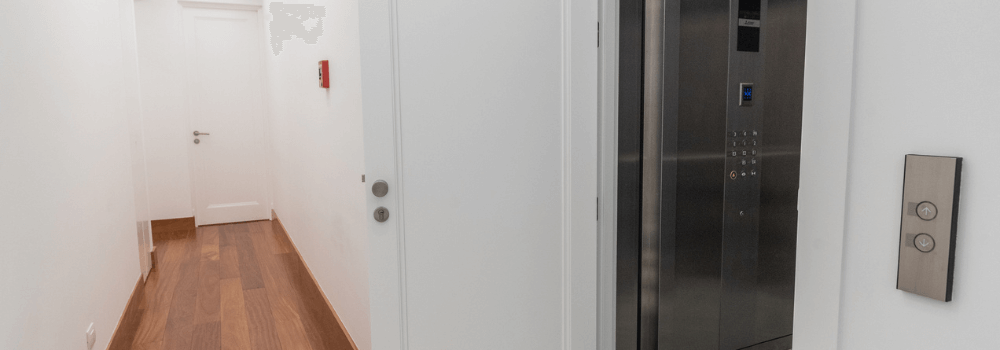
Home lifts can transform how a house works day to day. The aim is step‑free movement that feels effortless while the rooms stay calm and legible. Placement determines that outcome. This guide sets out practical strategies for existing homes, with notes on models, accessibility, cost factors and when an external option may be appropriate. It reflects how projects run on site: measured surveys, finish schedules, planned delivery routes and a tidy handover. A brief placement review on drawings keeps the programme orderly and reduces late changes.
Where should a home lift sit in an existing house?
Effective placement begins with desire lines and finished floor levels. Central positions shorten routes in compact plans. Edge positions protect long views in open‑plan rooms. We verify structure, power and landing widths at survey, with your structural engineer as required. We record finished floor levels on drawings, agree door swings and set the call point heights before works begin.
We review daily circulation and note where occupants pause and which views matter. In townhouses, a central position brings floors together and keeps routes short; in open‑plan rooms, an edge position preserves primary views. Keep landings generous so doors open safely and call points sit where hands fall. For placement ideas, see our Case Studies.
How much space do you need for a home lift?
Space depends on model and plan. Landing widths, door swings and finished floor levels are confirmed at survey. Compact formats work in tight footprints; larger cabins suit wheelchairs and carers. Drawings record reveal depths and approach routes so clearances stay consistent floor to floor.
We note landing widths and door swings on drawings, then check turning space on each level. For home lifts, we confirm structural spans and ceiling clearance at survey so the opening stays tidy.
Where is it easiest to open between floors?
Hall and landing zones often suit openings because the structure and services are predictable. We confirm exact placement on drawings and at survey. We fix routes, thresholds and door heads so the opening reads cleanly and sightlines remain intact.
For home lifts, we align head heights with nearby doors, set thresholds so floors meet flat and reroute services early to keep junctions neat and long views intact.
How long does a typical home lift install take?
Timelines vary by model and site, but modular systems install quickly compared with conventional lifts. A formal programme follows survey.
Pre‑start fixes access windows, protection and delivery sequence. Once the opening, power and isolation are ready, the team installs modular sections quickly, keeping rooms usable where possible.
Do I need major building work for a home lift?
Pneumatic vacuum lifts need no pit or machine room and use circular openings; confirm exact scope at survey.
Pneumatic formats work well in finished homes because works centre on a circular opening and a level base. Larger shafted cabins may involve more joinery and coordination.
Which home lifts keep building work light?
Pneumatic vacuum lifts stand on finished floors with no pit or machine room. Circular openings between floors keep structural change modest, which suits finished or near‑finished homes.
These self‑supporting cylinders arrive in modular sections that pass through standard doors, so access often avoids alterations at the entrance, subject to the site survey. Works focus on a level base, a dedicated power/isolator position and a clean opening between floors. For models and placement notes, review our Pneumatic Vacuum Lifts overview.
How do home elevators for wheelchairs change placement rules?
Prioritise wider landings, straight approaches and clear door swings. Align call points at reachable heights and keep thresholds flush so wheels roll smoothly.
For home lifts serving wheelchair users, we check turning circles and approach widths on every floor. We aim to keep approaches straight where possible, maintain clear wall space for transfers and set thresholds flush so wheels roll smoothly.
Aritco Home Lift Compact, Aritco Home Lift Access or Stiltz: how do I choose?
Match form factor to the plan and finishes to the palette. Review ceiling clearance, landing sizes and delivery access during a showroom consultation.
The right choice depends on structure, spans and how you use the rooms. Compact shafts help in tight plans; larger cabins suit wheelchair use. For home lifts, finishes should sit within your palette, not read as an add‑on.
When do outdoor home elevators make sense?
Exterior placement can protect interiors when inside space is constrained or the plan is complex. You still need weather protection, a safe service route and a considered interface at door heads. All of this is subject to survey and any consents required.
An outdoor home lift run often suits annex access, pool houses or where listed fabric limits internal options. We detail weathering and thresholds carefully and confirm consents at the outset.
How do you keep a luxury home lift visually quiet?
Coordinate metals with ironmongery, trims with flooring and glass clarity with adjacent glazing. Keep reveals slim and junctions precise, so lines read cleanly.
A palette the lift can adopt works better than a finish that competes. Sightlines remain clear when head heights align with adjacent door sets. Consistent metal tones across handles, frames and trims help the finishes read as a single family.
What drives the cost of a home lift in an existing house?
Model, travel height, number of stops, finishes and site works influence budget. Our home lifts start from £14,800. Most building work costs are subject to site survey.
Design decisions set the budget more than any single feature on site. Larger cabins, additional stops and bespoke finishes move budgets. Clear drawings and an agreed placement cut rework and accelerate decisions.
What does the Morgan Ellis process cover from survey to handover?
Survey, placement review, finish coordination, drawings, installation and handover. A defined sequence keeps projects tidy and predictable.
At survey, we set out likely locations and record access notes and delivery routes. We align finishes with your palette and issue drawings that record door positions, call point heights and reveal dimensions. Sections arrive in modular form, and we protect finished surfaces during installation. Handover includes commissioning, a brief sound check and maintenance guidance so performance stays consistent. For the full sequence, see the Process of Buying a Home Lift.
Considering a visit?
We can host a private, by-appointment showroom consultation to review models, finishes and placement options. If plans or room dimensions are available, please bring them. Arrange a private consultation to see cabins, glass and trims under natural light and discuss the programme with a specialist.
Throughout every stage, Morgan Ellis focuses on delivering home lifts that integrate effortlessly into each project. Each of our home lifts is designed to complement architectural intent and maintain design integrity. Clients investing in home lifts gain reliable access, refined style and a long-term addition that strengthens both comfort and value.