
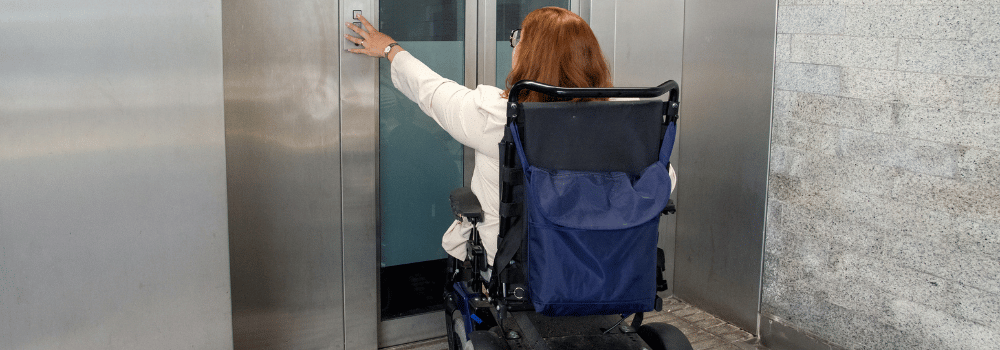
While many home elevators for wheelchair users meet regulatory standards sounds reassuring, in practice, though, that baseline often falls short of what real daily use demands.
A lift can satisfy technical requirements and still feel awkward, tiring, or limiting once someone starts using it every day. The cabin may be too narrow for an easy entry. Turning space may feel tight. The door may need too much force. The controls may sit in the wrong place. The interior may feel clinical, cramped, or uncomfortable. A product can pass inspection and still fail the person using it.
That gap matters. People do not invest in a lift simply to move between floors. They want to move around their home with dignity, independence, and ease. They want the property to work properly now and still work well years from now. For homeowners, architects, and interior designers, that means looking past baseline compliance and focusing on actual usability.
Morgan Ellis works in that space. The company positions its lifts as design-led residential solutions for homeowners, architects, and developers, with support from consultation through installation, plus showroom visits and bespoke quotations. Its range includes home lifts and PVE vacuum elevators, with a strong emphasis on design integration, ride quality, and premium residential use.
Why compliance does not tell you enough
Compliance is a starting point. It is not the full buying decision.
A buyer can look at a specification sheet and see that a wheelchair-accessible lift is technically suitable. That still leaves a series of practical questions unanswered. Can the user enter and leave without awkward repositioning? Can they reach the controls easily from a seated position? Does the door support independent use? Does the cabin feel calm and comfortable, or does it feel like a compromise inside an otherwise well-designed home?
Those questions shape daily life far more than many brochures admit.
The industry source you shared points in the same direction. It highlights factors such as adequate cabin size, accessible controls, non-slip flooring, ride smoothness, and emergency battery backup as practical parts of a wheelchair-friendly home lift, not optional extras.
That is why home elevators for wheelchairs should never be judged only by a tick-box view of access. The real measure is how naturally they fit into the user’s routine and the home itself.
The common faults that reduce real usability
The most common problems tend to appear after installation, when the owner starts using the lift as part of ordinary life.
One issue is space. A cabin may technically fit a wheelchair but still leave too little room for a simple, comfortable entry. That can force small corrections, awkward turning, or a slower exit. Over time, that friction adds up.
Another issue is door operation. Heavy manual doors often make independent use harder than it should be. A user may need extra strength, a second hand, or support from someone else at the exact point where the lift should be making movement easier.
Control position causes similar problems. If buttons sit too high, too far back, or off to one side, the user must stretch or reposition to operate the lift. That is not good design. It is a sign that the product was specified around minimum dimensions rather than daily function.
Interior comfort also matters more than some spec sheets suggest. A lift that feels dim, tight, or stark can make the user feel less at ease. That affects confidence. It affects how willingly the lift is used. It affects how well the lift supports the wider goal of independent living at home.
Dignity and confidence should be part of the brief
This is where the conversation needs to become more thoughtful.
A lift should support movement through the home without making the user feel managed or conspicuous. That is not a soft point. It is part of the practical outcome. A person who can use the lift easily, privately, and comfortably is more likely to rely on it with confidence. A person who finds the process awkward may still feel restricted, even after the installation is complete.
When a customer reviews a home elevators for wheelchairs, they should look at more than size and compliance. They should ask how the lift supports dignity. They should ask how the design reduces dependence on other people. They should ask how the cabin feels to use in ordinary moments, not only in a product demonstration.
That is also why premium residential lift planning needs design thinking. In a high-end home, the lift should support the standard of the interior, not interrupt it.
What a better decision gives you later
This is where the future view becomes useful.
A well-chosen lift gives you more than present-day access. It gives you easier movement through the property over time. It supports long-term living in the home. It helps architects and interior designers protect the quality of the scheme while still delivering practical access. It gives families more confidence in how the home will function in the years ahead.
That future value is a big part of the buying decision. Clients are not only solving a current challenge. They are shaping the way the property works in the next stage of life.
Morgan Ellis presents this as part of a broader residential offer. Its home lifts are framed for new builds, renovations, and existing homes, while its product pages and showroom content focus on tailored advice, site planning, and solutions that sit comfortably within premium domestic interiors.
A more considered route for your project
If you are comparing home elevators for wheelchairs, it helps to start with the property and the user, not only the product category.
That means reviewing approach routes, landing space, control reach, cabin comfort, and the wider design of the home before narrowing down lift options. It also means bringing in a specialist early enough to shape the layout properly.
Morgan Ellis offers consultations, site visits, bespoke quotations, and showroom access, which makes that early-stage decision process easier to handle with more confidence.
Design quality affects practical use
A wheelchair-friendly lift should feel like part of the home.
That does not mean style takes priority over function. It means good design supports function. A clear layout, sensible control placement, balanced lighting, and a cabin that feels open and calm all improve daily use. They also help the lift feel appropriate within a luxury residential setting.
We place strong emphasis on this design-led approach. Our showroom invites buyers to experience ride quality, appearance, and spatial fit in person before deciding.
That is a better route for customers who do not want a lift to feel clinical or separate from the rest of the property. They want a product that supports accessibility while still respecting the design standard of the home.
The specialist answer should come in early
One weakness in many lift projects is timing. The specialist arrives too late, after the broad layout is already fixed.
That makes it harder to solve the practical issues properly. It narrows the design choices. It increases the chance of compromise.
A stronger process starts with specialist input early in the conversation. Morgan Ellis positions itself around that full-project support, with guidance for homeowners, architects, and contractors from preparation through installation. That makes the company a natural fit when the brief includes access, design integration, and long-term domestic use.
Speak to Morgan Ellis about the right fit for your home
If your project is moving from ideas into planning, now is the time to discuss layout, product type, and day-to-day usability with a specialist. Morgan Ellis offers site visits, bespoke quotations, and direct advice for residential lift projects, so your decision is based on how the lift will work in your home, not only on a brochure line. Contact us today to arrange a consultation and take the next step with clear, practical guidance.