
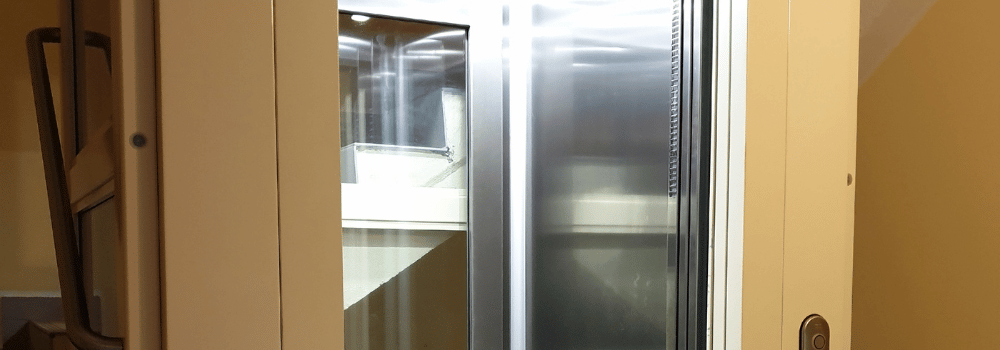
Retrofitting Aritco lifts into an existing home is often feasible, even when the property was never designed for vertical access. The decision usually comes down to where the lift can open at each level, what the structure allows, and how the location affects movement through the home.
Space alone does not make a retrofit work. The practical test is whether the lift supports safe, comfortable landings and fits the plan without creating pinch points or awkward circulation. What follows covers locations that can work in real homes, plus the checks that help you confirm feasibility early.
Can Aritco Lifts Be Retrofitted into Homes Not Designed for Them?
Often, yes. The key question is not whether the lift can sit in a corner, but whether the landings work cleanly at each level once a survey confirms the constraints.
Retrofit rarely means “no work.” It means you plan placement and landings around the existing structure, then confirm feasibility before you commit to fixed details like joinery or glazing lines.
What Makes Aritco Lifts Suitable for Retrofit Projects?
Aritco’s approach can suit retrofit projects where you want compact vertical access that still respects the interior scheme. Even so, a retrofit still needs a sensible location, safe landings, and a clear installation plan.
If you are still weighing up options, the Aritco home lift page gives a quick overview before you assess placement in your own layout.
A self-contained lift design suited to existing structures
Many homeowners worry a lift will need major overhead space, a dedicated plant area, or intrusive equipment. In practice, Aritco’s approach can reduce that overhead compared with more traditional elevator arrangements.
Morgan Ellis usually recommends an early feasibility review first. That step confirms what the structure can accommodate and where openings can go without compromising circulation. If you are still early in planning, a virtual site survey can help you pressure-test likely locations before drawings and finishes are final.
If you want manufacturer-level context on retrofit examples, Aritco has a dedicated article on retrofitting lifts into unusual spaces. It can be a helpful reference, but your home still needs a plan based on its layout and constraints.
Design-led finishes that integrate into completed interiors
In premium homes, the lift needs to integrate cleanly with the interior scheme. Placement and door orientation matter as much as the footprint, especially from key viewpoints.
Specification choices matter here. When you define finish intent early, you reduce the risk of late changes that force compromises at the landings.
Where Can Aritco Lifts Be Retrofitted in Tight or Awkward Layouts?
Start with landings, not the footprint. In retrofit projects, the lift works best when it opens into usable space at each level and sits comfortably within the home’s circulation. Once those conditions are in place, Aritco lifts can suit several tight-footprint locations that homeowners often overlook.
Under-stair and stair-adjacent spaces
Stair-adjacent voids often work because they sit within existing circulation and can align naturally with landings, so the lift reads as part of the layout rather than an addition.
Before you treat an under-stair area as a serious option, confirm these points:
- Can you align landings so the lift opens into usable space at each level?
- Do you have enough headroom and clearance for safe entry and exit?
- Will door positions work without creating pinch points at landings?
- Does the nearby structure allow openings without creating avoidable rework?
Under-stair locations often fail for the same reasons. Tight landings, awkward door swings, or structural elements in the wrong place can make a visually appealing location impractical.
Unused corners near circulation routes
Corners near halls, landings, and transitional spaces can suit a retrofit because they preserve the primary rooms. This matters in design-led homes where you want to protect sightlines, furniture planning, and natural circulation.
A good corner placement usually achieves two things:
- It keeps the lift close to the household’s main routes between floors.
- It avoids taking the best part of a room for a purely functional element.
If you are working with an architect or interior designer, treat the lift like any other fixed element. Decide early whether the lift should read as a discrete component or a defined feature, then confirm feasibility before you freeze the final drawings.
Tight architectural gaps between rooms or floors
Some homes have narrow zones created by chimney breasts, service risers, or changes in structural grid. These gaps only work when they allow safe access and realistic openings at each level.
Ask a practical question first: can someone step out of the lift comfortably at each level without immediately meeting a wall, door, or stair edge? If the answer is “maybe,” you need a site-specific feasibility review before the idea becomes part of the scheme.
What Needs to Be Confirmed Before Choosing a Retrofit Location?
A retrofit succeeds when it supports daily use and protects the plan. Confirm landings and constraints early, and you avoid the common problem of designing around a location that looks workable on paper but falls down in practice.
Landings, access points, and day-to-day use
Landings drive day-to-day usability. A lift that opens into a tight landing can cause daily inconvenience, even if the lift fits the footprint.
It helps to think about:
- Where you carry items between floors (shopping, laundry, luggage)
- Whether you need wider landings for accessibility or long-term planning
If you plan the lift around landings and movement patterns, the placement usually becomes clearer.
Structure, services, and existing constraints
Most retrofit questions come down to what sits inside floors and walls. Joists, beams, electrics, and plumbing routes can limit where you can form openings and how you can route services.
A survey keeps this simple. Morgan Ellis reviews the layout, ceiling heights, access, and the likely routes for services, then confirms what works in practice so you can make decisions with fewer assumptions.
Noise, privacy, and sightlines in premium homes
In high-spec homes, placement often hinges on how the lift affects privacy and how it looks within key views. Bedrooms beside landings and open-plan living zones can change what “good placement” looks like, particularly in homes with glazed circulation.
If ride feel and noise performance matter in your decision, see: What makes Aritco lifts so smooth?
How Much Building Work Is Usually Involved in a Retrofit?
Expect some level of work in most retrofits. The amount varies by property, but the survey phase turns early assumptions into an installation plan you can schedule with other trades.
Treat “retrofit-friendly” as a planning advantage, not a guarantee of minimal building work. The survey helps you sequence the work with other trades in a way that protects finishes and reduces disruption.
For a broader view of how retrofit differs from new build planning, see: How to plan for a home lift in a new build vs. a renovation
A Practical Retrofit Decision Framework for Aritco Lifts
If you want a useful feasibility answer early, share enough information for the team to assess placement and constraints. You do not need a full technical pack to start, but you do need clarity on landings and stops.
This is also where Morgan Ellis adds value. Instead of guessing from product specifications, the team can review your layout, discuss landing priorities, and confirm whether an Aritco solution fits your space and your interior brief. That usually gives you a clearer answer faster than trying to decide from dimensions alone.
The three inputs that support a quick feasibility answer
- A floor plan (even a simple one)
- Photos or a short walkthrough video
- Preferred landing positions and number of stops
When seeing the lift in person can help decisions
Seeing proportions and finishes in person can reduce uncertainty, especially when you are choosing door positions and checking sightlines.
If you can visit, the Morgan Ellis showroom can help you make decisions with more confidence.
Bringing Retrofit Ideas into a Real Plan
The best retrofit outcomes come from a clear landing strategy and early confirmation of constraints. When those pieces are in place, the lift can improve daily access without disrupting the plan or the interior scheme.
If you want to explore Aritco options with Morgan Ellis, start here: Aritco range. If you would like a clear view of the steps after an initial enquiry, the process of buying a home lift page sets out what to expect.
If you would like to see how lifts integrate into real homes, the case studies give useful context.
If you would like to discuss your layout and whether Aritco lifts suit your space, you can contact Morgan Ellis. A floor plan and one or two photos are usually enough to start a practical feasibility conversation.